Introduction: The OEM Opportunity in Industrial Seating
For distributors and brands in the industrial furniture and workplace equipment market, OEM (Original Equipment Manufacturer) sourcing from Chinese manufacturers offers a compelling opportunity: access to high-quality, competitively priced industrial seating products that can be branded and sold under your own label. However, the OEM industrial seating market has significant variation in quality, compliance, and reliability, and navigating it successfully requires understanding what to look for in a manufacturing partner.
This guide is written for international distributors, workplace equipment brands, and procurement teams considering OEM industrial seating sourcing from China. It covers quality assessment, compliance requirements, MOQ considerations, logistics, and the key questions to ask potential manufacturing partners.
Quality Assessment: What to Look for in an OEM Partner
The quality of OEM industrial seating varies enormously across Chinese manufacturers. The key indicators of a reliable OEM partner include:
ISO 9001:2015 Certification
ISO 9001 certification indicates that the manufacturer has implemented a systematic quality management system. This is the minimum quality certification to require from an OEM partner. Verify that the certification is current and issued by an accredited certification body (not a self-issued certificate). Request the certificate number and verify it with the issuing body.
Manufacturing Capability
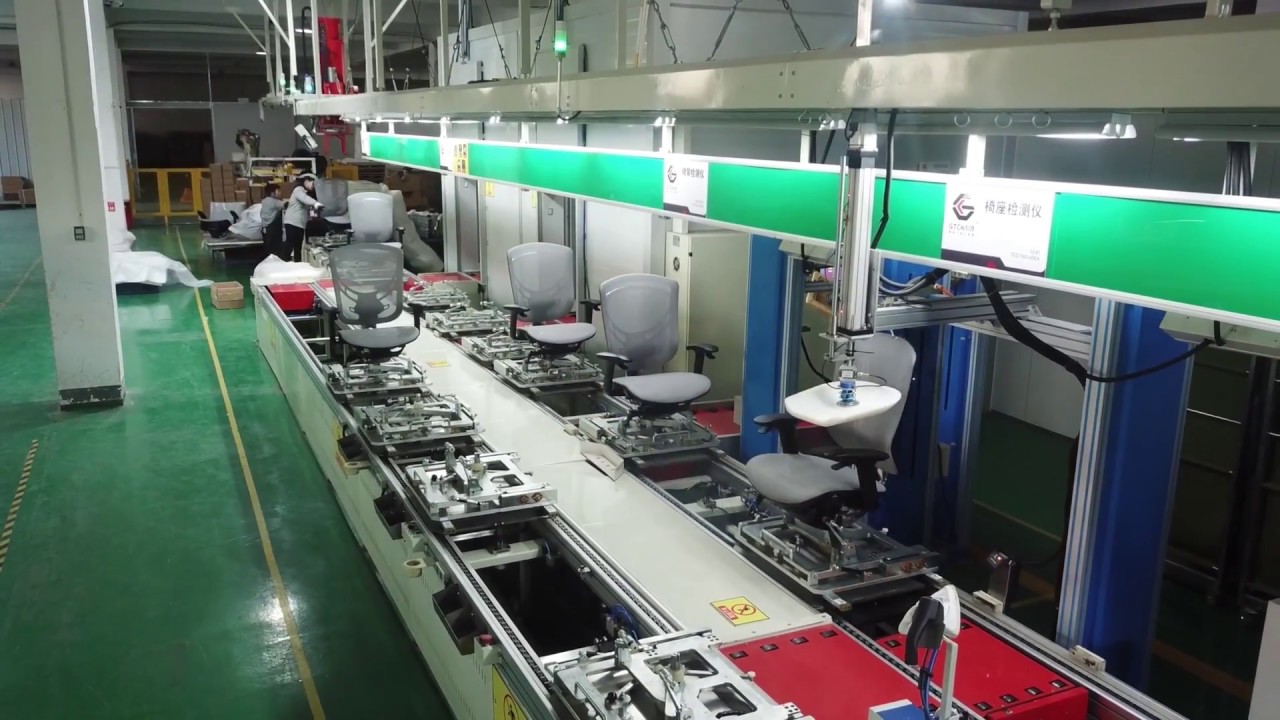
Visit the factory (or request a virtual factory tour) to assess manufacturing capability. Key indicators of a capable manufacturer include: CNC fabrication equipment for consistent component production, robotic or semi-automated welding for consistent weld quality, in-house powder coating or surface treatment, and systematic quality control processes including incoming material inspection, in-process inspection, and final inspection.
Product Testing Documentation
Request test reports for the specific products you intend to source. Test reports should be from accredited third-party testing laboratories (not in-house tests) and should reference the specific standards relevant to your market (EN 1335 for Europe, BIFMA X5.1 for North America, IEC 61340-5-1 for ESD products). Be wary of manufacturers who cannot provide third-party test documentation.
Export Experience
Manufacturers with established export experience understand the documentation, packaging, and logistics requirements for international shipments. Ask for references from existing international customers and verify their experience with your target market's import requirements.
Compliance Requirements by Market
Different markets have different compliance requirements for industrial seating. Understanding your market's requirements is essential before engaging with an OEM manufacturer:
European Union
Industrial chairs sold in the EU must comply with relevant EU directives and regulations. For general industrial chairs, the Machinery Directive (2006/42/EC) may apply if the chair incorporates powered mechanisms. The General Product Safety Directive (2001/95/EC) applies to all consumer and professional products. CE marking may be required depending on the specific product category. EN 1335 compliance is expected by professional buyers, though not legally mandated for all industrial chair types.
United States and Canada
The US market does not have mandatory certification requirements for industrial chairs, but BIFMA (Business and Institutional Furniture Manufacturers Association) certification is expected by commercial buyers. BIFMA X5.1 certification for general-purpose chairs and BIFMA X5.11 for large occupant chairs are the relevant standards. California Proposition 65 compliance is required for products sold in California.
Australia and New Zealand
AS/NZS 4438 (Height Adjustable Swivel Chairs) is the relevant Australian standard. Products must comply with Australian Consumer Law requirements. Some industrial chair categories may require compliance with specific workplace health and safety regulations.
MOQ, Pricing, and Lead Times
Understanding the commercial terms of OEM industrial seating sourcing helps distributors plan their inventory and pricing strategy:
Minimum Order Quantities
For standard catalog products with your branding (logo, packaging), MOQs typically range from 50–200 units per model. For custom products with design modifications (different upholstery colors, modified dimensions, custom features), MOQs are typically 100–500 units per model. For completely new product development (custom design from scratch), MOQs may be 500–1,000 units.
Pricing Structure
OEM pricing from Chinese manufacturers is typically quoted FOB (Free On Board) Shanghai or the nearest export port. Freight costs, import duties, and local distribution costs must be added to calculate landed cost. For European buyers, import duties on industrial chairs from China are typically 2.7% (MFN rate). For US buyers, Section 301 tariffs on Chinese furniture may apply — verify current rates before finalizing pricing.
Lead Times
Standard catalog products with branding modifications: 25–35 days. Products with custom upholstery colors or minor modifications: 35–45 days. Custom products with significant design changes: 60–90 days. These lead times assume that all specifications and samples have been approved before production begins.
Logistics and Documentation
Industrial chairs are relatively large, bulky products that require careful attention to packaging and logistics. Key considerations for international OEM shipments include:
Packaging must protect chairs from damage during ocean freight (typically 25–40 days for Europe, 20–30 days for US West Coast). Chairs are typically shipped partially disassembled to reduce shipping volume. Ensure that assembly instructions in your local language are included with each shipment.
Required export documentation includes: commercial invoice, packing list, bill of lading, certificate of origin (for preferential duty rates where applicable), and any required product certifications (test reports, CE declarations, etc.). A reliable OEM manufacturer will have experience preparing these documents and can guide you through the documentation requirements for your market.
Conclusion: Choosing the Right OEM Partner
Successful OEM industrial seating sourcing from China requires a manufacturing partner with verified quality management systems, relevant product certifications, export experience, and the flexibility to accommodate your branding and customization requirements. The due diligence investment in selecting the right partner pays dividends in product quality, delivery reliability, and long-term business relationship.
TuoFu Industrial Seating has been manufacturing and exporting industrial chairs for over 20 years. We offer OEM services to distributors in USA, Germany, UK, Canada, Australia, and other markets, with full customization capabilities, ISO 9001:2015 certification, and comprehensive export documentation. Contact our OEM sales team to discuss your requirements.
Ready to Source Industrial Chairs?
Contact TuoFu Industrial Seating for pricing, samples, and OEM capabilities. Our export team responds within 24 hours.
Get a Free Quote