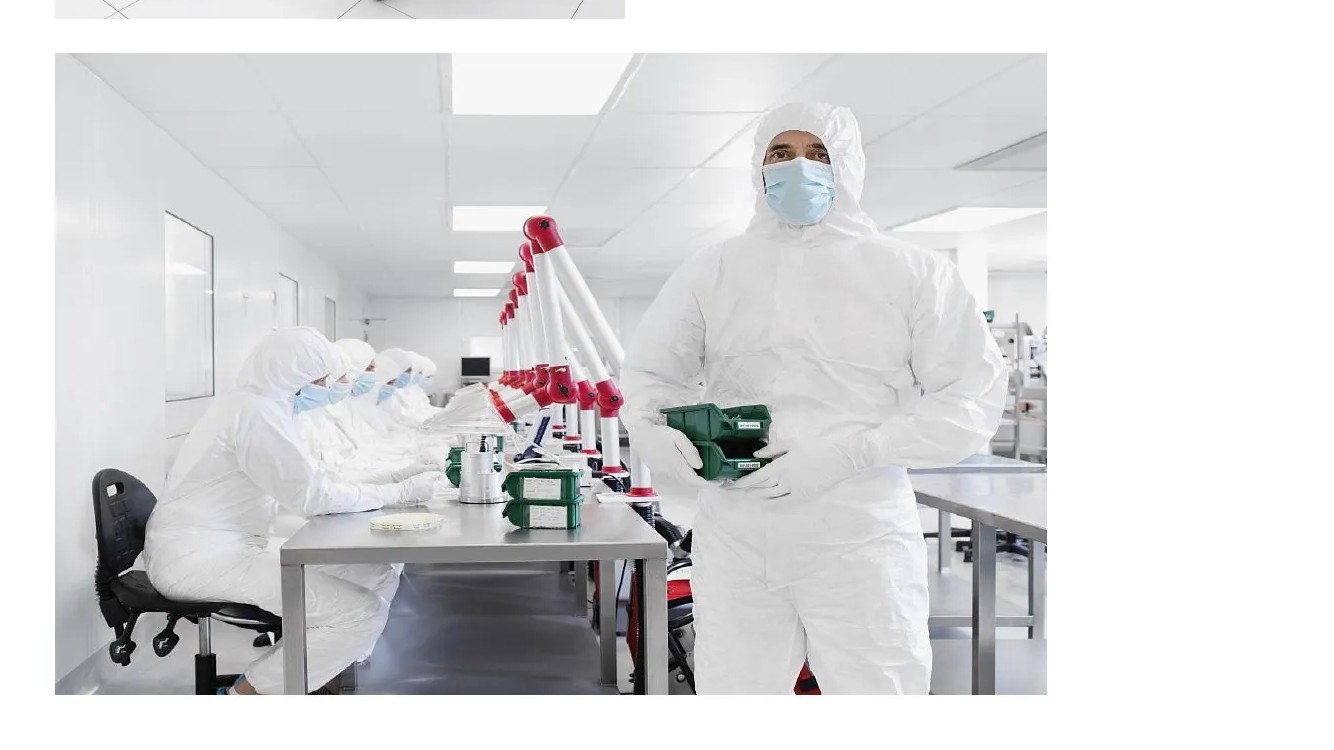
Introduction: Why Cleanroom Chairs Are Different
Cleanrooms are among the most demanding environments for any piece of equipment or furniture, including seating. A standard industrial chair — even a high-quality one — can be a significant source of contamination in a cleanroom environment. Fabric upholstery sheds fibers, foam degrades and releases particles, and standard casters can track in contamination from outside the cleanroom. For cleanroom operators who spend their entire shift seated, the chair they use is a critical factor in maintaining cleanroom cleanliness standards.
Cleanroom chairs are specifically engineered to minimize particle generation, resist chemical cleaning agents, and — in many applications — provide ESD protection. Understanding the requirements for cleanroom seating is essential for facility managers, procurement specialists, and cleanroom designers in pharmaceutical, semiconductor, medical device, and precision electronics manufacturing.
ISO Cleanroom Classification and Seating Requirements
The ISO 14644-1 standard classifies cleanrooms by the maximum allowable particle concentration at specific particle sizes. The requirements for cleanroom furniture, including chairs, become increasingly stringent as the ISO class number decreases (ISO Class 1 is the cleanest; ISO Class 9 is the least clean):
ISO Class 7–8 (Equivalent to Class 10,000–100,000): These are the most common cleanroom classifications for pharmaceutical manufacturing, medical device assembly, and general precision manufacturing. At this level, chairs must use smooth, non-particle-generating upholstery (typically vinyl or PU-coated materials), avoid exposed foam or fabric, and be cleanable with standard cleanroom disinfectants.
ISO Class 5–6 (Equivalent to Class 100–1,000): Semiconductor fabrication, advanced pharmaceutical manufacturing, and precision optics manufacturing operate at these levels. Chair requirements become more stringent: all materials must be evaluated for outgassing and particle generation, upholstery must be sealed without exposed seams, and the chair structure should minimize crevices where contamination can accumulate.
ISO Class 3–4: The most demanding cleanroom environments, used for advanced semiconductor manufacturing and specialized research. At these levels, chair selection requires detailed material qualification, and chairs may need to be gown-compatible (designed to be used while wearing full cleanroom gowning including coveralls, gloves, and face masks).
Key Material Requirements for Cleanroom Chairs
The materials used in cleanroom chairs must meet specific performance criteria that differ significantly from standard industrial chairs:
Upholstery
The upholstery is the most critical material choice for cleanroom chairs. Standard fabric upholstery is completely unsuitable — it sheds fibers continuously and cannot be effectively cleaned with cleanroom disinfectants. Acceptable cleanroom upholstery materials include:
- PU (Polyurethane) Vinyl: The most common choice. Smooth, non-porous surface that does not shed particles. Resistant to most cleanroom disinfectants including IPA (isopropyl alcohol), quaternary ammonium compounds, and hydrogen peroxide. Available in ESD-dissipative formulations for combined cleanroom/ESD applications.
- Neoprene: Excellent chemical resistance, particularly for applications involving aggressive disinfectants or solvents. More expensive than PU vinyl but provides superior durability in harsh chemical environments.
- Stainless Steel Seat Pan: For the most demanding applications, a stainless steel seat pan eliminates upholstery entirely. Completely non-particle-generating and autoclave-sterilizable. Used in pharmaceutical aseptic manufacturing and medical device cleanrooms.
Frame and Base Materials
The chair frame and base should be made from materials that do not corrode, outgas, or generate particles. Powder-coated steel is acceptable for ISO Class 7–8 environments. For more demanding applications, anodized aluminum or stainless steel frames are preferred. Avoid chrome plating, which can flake over time.
Casters
Standard rubber casters can track contamination into the cleanroom and generate particles as they roll. Cleanroom chairs should use casters with conductive or ESD-dissipative compounds (if ESD protection is required), smooth non-particle-generating tread, and sealed bearings to prevent lubricant contamination.
ESD Requirements in Cleanroom Applications
Many cleanroom applications — particularly in semiconductor, electronics, and pharmaceutical manufacturing — require chairs that provide both cleanroom performance and ESD protection. The combination of cleanroom and ESD requirements creates specific design challenges:
ESD-dissipative PU vinyl upholstery must maintain its resistance properties (10⁶–10⁹ Ω) after repeated cleaning with IPA and other cleanroom disinfectants. Standard ESD materials may lose their conductivity after aggressive chemical exposure. Quality cleanroom/ESD chairs use upholstery materials specifically formulated to maintain ESD properties through the expected cleaning cycle.
The complete grounding path — from upholstery through frame, base, and casters to the cleanroom floor — must be maintained in a cleanroom environment where floors may be ESD-conductive vinyl or raised access floor panels. Verify that the chair's ESD casters are compatible with your specific cleanroom floor type.
Cleanroom Chair Validation and Documentation
For regulated industries (pharmaceutical, medical device), cleanroom furniture including chairs may need to be validated as part of the facility qualification process. This typically requires:
Material certificates confirming that all chair components meet the required specifications. Particle generation test reports (typically performed per IEST-RP-CC024 or equivalent). Chemical resistance test reports confirming compatibility with your specific cleaning and disinfection protocols. ESD test reports (if applicable) per IEC 61340-5-1.
TuoFu provides complete documentation packages for cleanroom chair orders, including material certificates, test reports, and compliance declarations. This documentation supports your facility qualification and regulatory compliance requirements.
Buying Advice: Selecting Cleanroom Chairs
When purchasing cleanroom chairs, the most important step is to clearly define your requirements before evaluating suppliers. Key questions to answer: What is the ISO classification of your cleanroom? Are ESD properties required? What cleaning and disinfection agents are used? Are there specific material restrictions (e.g., no silicone, no latex)? Is documentation required for regulatory compliance?
Request material data sheets and test reports from suppliers, not just product specifications. A supplier who cannot provide test documentation for their cleanroom chairs is not a suitable partner for regulated manufacturing environments.
Conclusion
Selecting the right cleanroom chair requires a thorough understanding of your cleanroom classification, contamination control requirements, and regulatory compliance needs. The investment in properly specified cleanroom chairs pays dividends in maintained cleanliness standards, reduced contamination events, and regulatory compliance.
TuoFu Industrial Seating manufactures cleanroom chairs for ISO Class 3–8 environments, with ESD options and full documentation packages. Our cleanroom chairs are used in pharmaceutical, semiconductor, and medical device manufacturing facilities worldwide. Contact our technical sales team to discuss your cleanroom seating requirements.
Ready to Source Industrial Chairs?
Contact TuoFu Industrial Seating for pricing, samples, and OEM capabilities. Our export team responds within 24 hours.
Get a Free Quote