Introduction: Load Capacity as a Durability Predictor
When evaluating industrial chairs, load capacity is often treated as a simple specification — a number that must exceed the weight of the heaviest user. In reality, load capacity is a much more nuanced specification that serves as a proxy for overall chair quality and durability. Understanding how load capacity is determined, what it means in practice, and how it relates to long-term durability helps buyers make better purchasing decisions.
This article explains the engineering behind industrial chair load capacity ratings, how different components contribute to overall load capacity, and how to use load capacity specifications to predict chair durability in your specific application.
How Load Capacity Is Determined
Load capacity ratings for industrial chairs are not arbitrary numbers — they are derived from structural testing of the chair's components. The key tests that determine load capacity include:
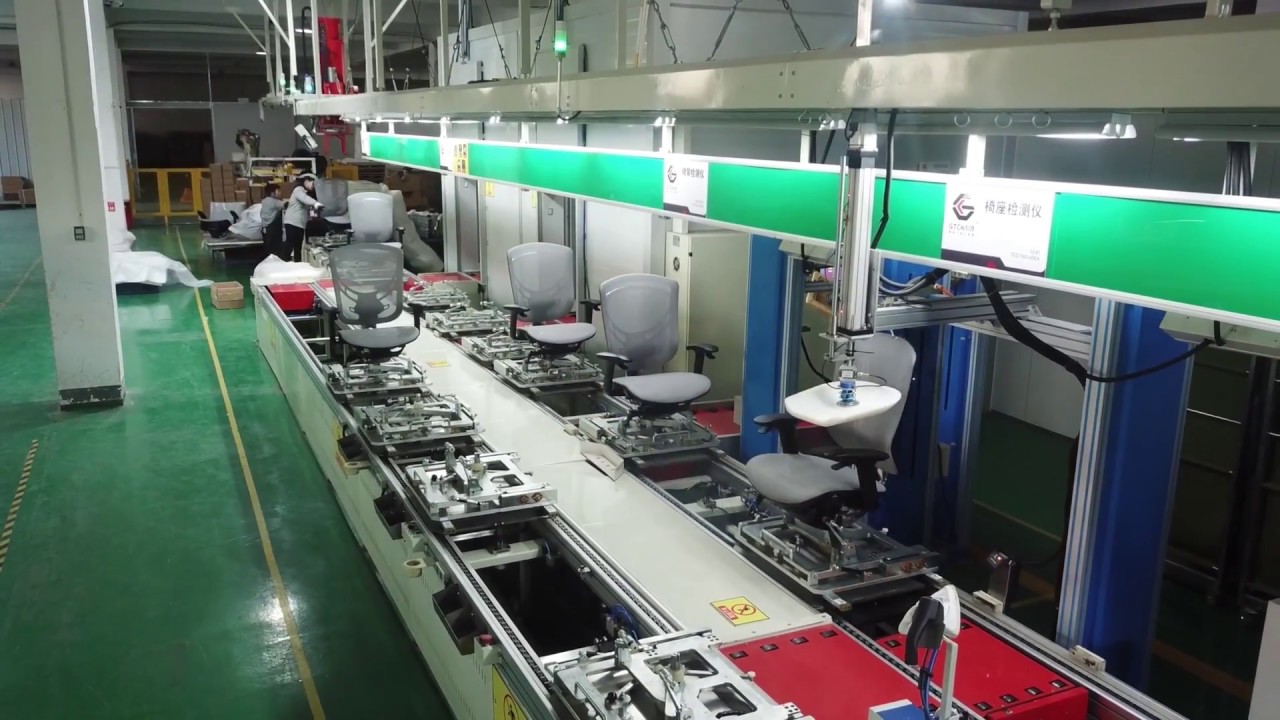
Static Load Testing
The chair is subjected to a static load applied to the seat center for a specified duration (typically 1 hour or more). The load is typically 1.5–2× the rated capacity. The chair must not deform, crack, or fail during or after the test. This test verifies the structural integrity of the seat frame, base, and gas cylinder under sustained loading.
Dynamic Load Testing (Drop Test)
A weight equal to the rated capacity is dropped onto the seat from a specified height (typically 100–150mm) to simulate the impact of a person sitting down forcefully. The chair must withstand a specified number of drop cycles (typically 10,000–100,000 cycles) without failure. This test is particularly important for industrial applications where workers frequently sit down with force.
Fatigue Testing
The chair is subjected to repeated loading and unloading cycles at the rated capacity to simulate years of daily use. The number of cycles required varies by standard — BIFMA X5.1 requires 100,000 cycles for the seat and back. Industrial chairs should be tested to significantly higher cycle counts than office chair standards.
Gas Cylinder Testing
The height adjustment mechanism is tested separately for both load capacity and cycle life. The cylinder must support the rated load without collapsing, and must complete a specified number of height adjustment cycles without failure. Industrial gas cylinders are typically rated for 500,000+ cycles at loads of 150–300 kg.
The Safety Factor Principle
A fundamental principle in structural engineering is the safety factor — the ratio between the actual failure load and the rated working load. For industrial chairs, safety factors of 1.5–2.5× are typical. This means a chair rated for 150 kg has been tested to withstand 225–375 kg before failure.
The safety factor serves two purposes: it provides a margin against unexpected overloading (a worker who weighs more than expected, or a dynamic impact load), and it ensures that the chair remains functional well below its failure load, providing years of reliable service.
For buyers, the practical implication is clear: selecting a chair with a higher load rating than strictly necessary provides a larger safety margin and longer service life. A chair rated for 200 kg used by a 90 kg worker is operating at 45% of its rated capacity — well within the safety factor — and will likely last significantly longer than a chair rated for 120 kg used by the same worker.
Component-by-Component Analysis
The load capacity of an industrial chair is determined by its weakest component. Understanding which components are most likely to limit load capacity helps buyers evaluate chair quality:
Gas Cylinder
The gas cylinder is typically the first component to fail under overloading. Signs of cylinder failure include gradual height loss (the chair slowly sinks to its lowest position) and sudden collapse. Quality industrial cylinders use thick-walled steel tubes and high-pressure nitrogen gas. Cylinder load capacity can be verified by requesting the manufacturer's cylinder specification sheet.
Base
The 5-star base distributes the load from the cylinder to the floor through five arms. Base failure typically manifests as arm cracking or bending, particularly at the junction between the arm and the center hub. Industrial bases use heavier-gauge steel (typically 2–3mm) and larger arm cross-sections than office chair bases.
Seat Frame
The seat frame supports the foam and upholstery and transfers the user's weight to the gas cylinder. Frame failure is typically visible as seat deformation or cracking. Quality industrial seat frames use steel or reinforced plywood construction, not the plastic frames common in office chairs.
Mechanism
The tilt mechanism (if present) must also support the rated load. Mechanisms in heavy duty industrial chairs use thicker steel stampings and heavier springs than office chair mechanisms. The mechanism's load capacity should be verified separately from the overall chair rating.
Practical Guidelines for Load Capacity Selection
Based on the engineering principles described above, the following guidelines will help buyers select appropriate load capacities for their industrial chair applications:
For general industrial applications with workers up to 100 kg, select chairs rated for at least 150 kg. For applications with workers up to 130 kg, select chairs rated for at least 200 kg. For heavy-duty applications or where workers may exceed 130 kg, select chairs rated for 250–300 kg.
For applications involving frequent forceful sitting (workers who sit down quickly and heavily), add an additional 20–30% to the calculated load requirement to account for impact loads. For applications with extended shift durations (10–12 hours), select chairs at the higher end of the appropriate load range to account for increased fatigue cycling.
Conclusion: Load Capacity as a Quality Indicator
Load capacity is more than a single specification — it is a window into the overall engineering quality of an industrial chair. Chairs with higher load capacities have been designed and tested to more demanding standards, typically resulting in longer service life even when used at loads well below the rated capacity.
TuoFu Industrial Seating offers industrial chairs with load capacities from 150 kg to 300 kg across our product range. All load capacity ratings are based on standardized testing, and we provide test documentation upon request. Contact our technical sales team to select the appropriate load capacity for your specific application.
Ready to Source Industrial Chairs?
Contact TuoFu Industrial Seating for pricing, samples, and OEM capabilities. Our export team responds within 24 hours.
Get a Free Quote