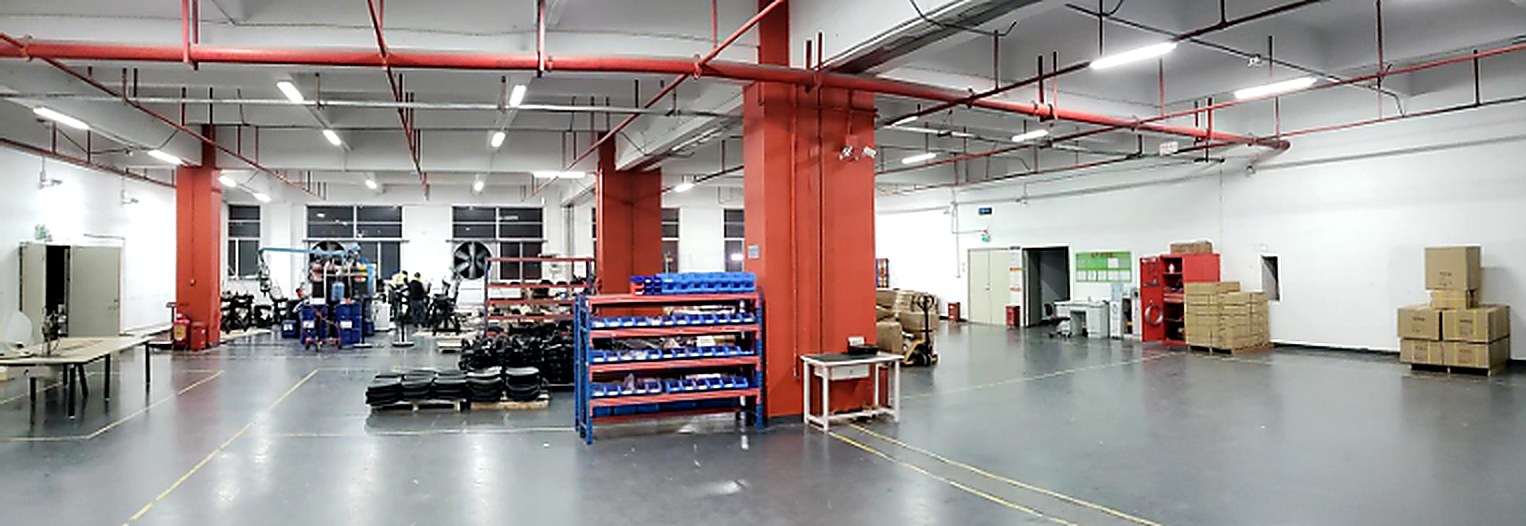
Introduction: Why Industrial Environments Need Purpose-Built Seating
A common mistake made by facility managers and procurement teams — particularly those without industrial purchasing experience — is specifying standard office chairs for industrial work environments. The assumption is that a "good quality" office chair should be adequate for any seated work. In practice, this decision leads to rapid chair failure, worker discomfort, and recurring replacement costs that far exceed the initial savings.
Heavy duty work chairs and standard office chairs are fundamentally different products designed for different applications. Understanding these differences is essential for making informed purchasing decisions for manufacturing plants, warehouses, production lines, and other industrial environments.
Structural Differences: Built for Different Loads
The most fundamental difference between industrial and office chairs is structural. Standard office chairs are designed for a typical office worker — typically rated for 100–120 kg (220–265 lbs) and designed for 8 hours of daily use in a climate-controlled office environment. Heavy duty industrial chairs are engineered for significantly greater demands.
Load Capacity
Heavy duty industrial chairs are typically rated for 150–300 kg (330–660 lbs), compared to 100–120 kg for standard office chairs. This difference reflects not just the need to accommodate heavier workers, but also the dynamic loads generated in industrial environments — workers sitting down forcefully, leaning heavily on armrests, and shifting their weight repeatedly during work tasks.
Frame Construction
Office chair frames typically use thin-gauge steel (0.8–1.2mm) or plastic components optimized for light weight and aesthetics. Industrial chair frames use heavy-gauge steel (1.5–2.5mm) with reinforced welded joints designed to withstand the stresses of industrial use. The base of an industrial chair — typically a 5-star base with a diameter of 580–680mm — is significantly more robust than an office chair base.
Gas Cylinder
The gas cylinder (pneumatic height adjustment mechanism) is one of the most critical components. Office chair cylinders are typically rated for 80–100 kg and 100,000–200,000 actuation cycles. Industrial chair cylinders are rated for 150–300 kg and 500,000+ cycles. Using an office chair cylinder in an industrial application leads to rapid failure — the cylinder may collapse under load or lose its height adjustment ability within months.
Material Differences: Designed for Industrial Environments
The materials used in industrial chairs are specifically selected to withstand industrial environments that would rapidly degrade standard office chair materials:
Upholstery
Standard office chairs typically use mesh, fabric, or light-duty vinyl upholstery optimized for breathability and aesthetics in office environments. These materials are not suitable for industrial use: fabric absorbs oils and chemicals, mesh tears when exposed to sharp edges or rough surfaces, and light-duty vinyl cracks when exposed to industrial solvents or temperature extremes.
Industrial chairs use heavy-duty PU vinyl, genuine leather, or specialized materials (ESD vinyl, chemical-resistant neoprene) selected for the specific industrial environment. These materials resist oils, solvents, and industrial cleaning agents, and maintain their integrity under the mechanical stresses of industrial use.
Foam Density
Office chair foam is typically 30–40 kg/m³ density — adequate for light office use but prone to rapid compression in industrial applications. Industrial chair foam uses 45–60 kg/m³ high-density foam that maintains its shape and support properties under continuous heavy use.
Casters
Office chair casters are designed for smooth office floors. Industrial casters are designed for concrete, metal grating, and uneven industrial surfaces. Industrial casters use harder rubber compounds (or polyurethane) that resist industrial floor contaminants and provide stable rolling on rough surfaces.
Functional Differences: Designed for Work Tasks
Beyond structural and material differences, industrial chairs are designed with specific work tasks in mind:
Height Range
Standard office chairs typically adjust from 420–520mm — appropriate for standard desk heights. Industrial chairs must accommodate a much wider range of workstation heights, from low assembly tables to elevated production equipment. Industrial chairs commonly offer height ranges of 400–650mm, with specialized models reaching 800mm or higher for elevated workstations.
Footring
A footring is a circular footrest integrated into the chair base, essential for elevated industrial workstations. Standard office chairs do not have footrings. Industrial chairs typically include adjustable footrings that provide stable foot support at any seat height, preventing the dangling-feet posture that causes circulation problems and lower back strain.
Specialized Configurations
Industrial chairs are available in configurations that have no office equivalent: sit-stand chairs for semi-seated work postures, saddle chairs for forward-leaning work tasks, backless stools for space-constrained workstations, and chairs with specialized armrests for assembly work.
Cost Comparison: Total Cost of Ownership
The initial price difference between industrial and office chairs is real — a quality heavy duty industrial chair typically costs 2–3× more than a comparable office chair. However, the total cost of ownership calculation strongly favors industrial chairs for industrial applications:
An office chair used in an industrial environment typically fails within 12–18 months due to overloading, material degradation, or mechanism failure. A quality industrial chair in the same environment should last 5–7 years with normal maintenance. When calculated on a per-year basis, the industrial chair is typically 40–60% less expensive than repeatedly replacing office chairs.
Conclusion: Match the Chair to the Environment
The choice between heavy duty industrial chairs and standard office chairs is not a matter of preference — it is a matter of matching the product to the application. Standard office chairs are excellent products for office environments. They are inadequate for industrial environments. Using the wrong chair type leads to rapid failure, worker discomfort, and unnecessary costs.
TuoFu Industrial Seating specializes in purpose-built heavy duty industrial chairs for manufacturing and industrial applications. Our chairs are designed from the ground up for industrial use, with load capacities, materials, and mechanisms appropriate for demanding work environments. Contact us to find the right industrial chair for your application.
Ready to Source Industrial Chairs?
Contact TuoFu Industrial Seating for pricing, samples, and OEM capabilities. Our export team responds within 24 hours.
Get a Free Quote